
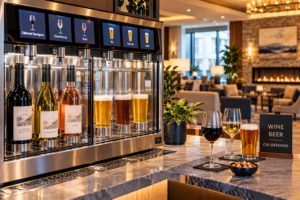
Picture a guest arriving at your hotel after a long day of traveling. They’ve checked in, dropped off their luggage, and are ready to unwind, but they’re not particularly interested in heading out to another restaurant or waiting for a bartender. Instead, they discover an inviting lounge area featuring comfortable seating, warm lighting, and a beautifully integrated wine and beer dispensing station. Suddenly, the lobby becomes more than a place to pass through on the way to an elevator. It’s somewhere guests actually want to spend time.
Hotels can offer wine and beer on demand by incorporating intelligent beverage dispensing systems into their lobbies, lounges, and other guest areas. These systems allow authorized guests to select beverages and receive accurately measured pours, often through room-key integration or other approved access methods. For hotel general managers and hospitality interior designers, on-demand dispensing creates opportunities to improve guest satisfaction, enhance the property’s atmosphere, and generate additional beverage revenue.
At Napa Technology, we help hospitality businesses rethink how they serve wine, beer, and other beverages. Our commercial dispensing systems combine modern presentation, convenient beverage access, and intelligent management features, giving hotels the flexibility to create engaging guest experiences without relying exclusively on traditional bar service.
How Do On-Demand Wine and Beer Dispensers Work in Hotels?
On-demand wine and beer dispensers allow hotels to offer controlled beverage service through automated systems that dispense selected portions. Depending on the equipment and configuration, hotels can provide staff-assisted service or controlled self-service experiences in designated areas.
Our WineStation® and TapStation™ systems support different beverage formats while giving hospitality operators greater control over dispensing, inventory, and service.
WineStation: Premium Wine by the Glass
WineStation allows hotels to offer bottled wines in precisely measured portions. Guests can enjoy smaller tastings, partial glasses, or full servings, depending on how the system is configured.
One of its biggest advantages is wine preservation. WineStation uses preservation technology designed to maintain the quality of opened bottles for up to 60 days, allowing hotels to expand their wine-by-the-glass selections without the same pressure to sell every opened bottle immediately.
This opens opportunities to feature premium wines that might otherwise be difficult to offer profitably by the glass.
TapStation: Beer and More on Demand
TapStation provides keg-based dispensing for beer, wine, batched cocktails, and other compatible beverages. Hotels can create an inviting tap station that complements their lounge design while simplifying portions and beverage management.
For hotel managers, consistent dispensing helps reduce overpouring and improve inventory control. Meanwhile, guests gain a convenient way to enjoy beverages without always waiting for traditional bar service.
Convenient Guest Access
Depending on the selected configuration, our dispensing technology supports hotel room keys, RFID credentials, and other access methods.
Room-key integration can allow approved purchases to be associated with a guest’s hotel folio through compatible systems. This helps create a connected experience while reducing friction during beverage purchases.
Of course, automated service must still follow applicable alcohol licensing, age-verification, and responsible-service requirements.
How Can Wine and Beer Dispensers Transform a Hotel Lobby?
Wine and beer dispensers can transform a hotel lobby by turning an ordinary transitional space into a welcoming social destination. When thoughtfully incorporated into the interior design, beverage stations encourage guests to settle in, connect with others, and spend more time enjoying the property’s amenities.
Create a Natural Gathering Place
Many hotel lobbies already feature comfortable seating, decorative lighting, and attractive finishes. However, these spaces can feel underused when there’s little reason for guests to remain after checking in.
Adding an on-demand beverage station introduces an activity that complements the setting. Guests can enjoy a glass of wine while chatting with colleagues, relaxing after sightseeing, or waiting for dinner reservations.
The result is a lobby that feels more like an inviting hospitality lounge than simply an entrance.
Make Beverage Service Part of the Design
For interior designers, automated dispensing equipment can become an intentional part of the visual experience.
Imagine a contemporary boutique hotel featuring a sleek wine dispensing station surrounded by warm wood cabinetry, subtle lighting, and upholstered lounge seating. In a larger urban hotel, a tap wall might complement industrial finishes, polished concrete, and communal gathering spaces.
Rather than treating beverage equipment as an afterthought, designers can establish the dispensing area as a focal point that supports the property’s overall aesthetic.
The key is considering how guests will interact with the space, not just how the equipment looks.
Encourage Guests to Stay and Explore
An attractive beverage station can provide an additional reason for guests to spend time in the lobby rather than immediately returning to their rooms or leaving the property.
For example, a hotel might position wine dispensing near a fireplace, reading area, or lounge seating arrangement. Guests could enjoy a tasting before dinner or gather for conversation after a conference.
These hotel lobby wine experience enhancements support a more engaging environment while creating opportunities for additional food and beverage purchases.
Why Does On-Demand Beverage Service Matter for Guest Satisfaction?
On-demand beverage service can improve guest satisfaction by making refreshments more convenient, offering greater selection, and allowing guests to enjoy drinks at their preferred pace. For hospitality operators, these benefits can help create a more flexible experience that accommodates different travel schedules and preferences.
Guests Appreciate Convenience
Hotel guests don’t always want to coordinate their plans around traditional bar service. Some arrive late, have limited time between meetings, or prefer a casual drink without committing to a full restaurant experience.
Wine on demand for hotels gives guests another option for enjoying refreshments within the property, during approved service hours and under appropriate supervision.
Smaller Portions Create More Choice
Not every guest wants a full glass of wine. Some may prefer a tasting before selecting a favorite, while others might enjoy sampling different varietals.
Our WineStation systems support multiple programmable serving sizes, making it easier to offer different experiences without relying on inconsistent manual pours.
A hotel could create a curated tasting experience featuring local wineries, premium selections, or wines paired with menu offerings. These options can make the beverage program feel more personalized and memorable.
Better Service Without Eliminating Hospitality
Automated dispensing isn’t about removing the human element from hospitality. Instead, it can complement existing staff and give them more flexibility to assist guests with other needs.
For example, a lobby attendant might help someone understand the available wines while the dispensing system handles portion accuracy. Bartenders and servers can also use automated equipment to streamline routine beverage service.
When technology supports the guest experience rather than replacing personal attention, hotels can maintain a welcoming atmosphere while improving operational flexibility.
How Can Wine and Beer Dispensers Help Hotels Generate More Revenue?
Wine and beer dispensers can create additional hotel revenue opportunities by making beverages available in convenient locations, supporting premium selections, and reducing waste associated with traditional dispensing methods. Actual financial performance depends on guest demand, pricing, operating costs, and how effectively the beverage program is managed.
Turn Underused Lobby Space Into a Revenue Opportunity
An attractive lobby seating area may already require significant investment in furnishings, lighting, and maintenance. Adding a beverage experience can give that space another operational purpose.
For example, guests gathering after a business meeting may decide to purchase a glass of wine or beer rather than leaving the property. A dispensing station positioned near comfortable seating can encourage this type of spontaneous purchase.
Offer Premium Wines With Less Waste
Traditional wine-by-the-glass programs can be challenging when opened bottles don’t sell quickly enough. Wine preservation technology helps hotels maintain more varied selections while reducing the risk of spoilage.
Our WineStation systems are designed to preserve opened wine for up to 60 days under appropriate operating conditions. This allows hotels to explore higher-end offerings without depending entirely on immediate bottle turnover.
Improve Pour Consistency and Inventory Management
Overpouring can affect beverage margins, particularly when hotels serve premium wine and spirits. Automated dispensing provides programmable portions that help operators maintain more consistent serving sizes.
Napa Technology’s cloud-based management platform also supports inventory oversight, reporting, and dispensing management. Hotel operators can use this information to better understand beverage consumption and adjust their offerings.
For managers balancing guest satisfaction with operating expenses, this added visibility can support more informed beverage-program decisions.
What Should Hospitality Designers Consider When Planning a Beverage Station?
Hospitality designers should consider placement, accessibility, guest movement, equipment requirements, and overall atmosphere when incorporating wine and beer dispensers into a hotel. A successful installation should look intentional while supporting practical operations and responsible beverage service.
Choose a Location That Encourages Interaction
The location should feel inviting without interfering with check-in queues, luggage movement, or major pedestrian routes.
A station near lounge seating, a restaurant entrance, or a designated social area can create opportunities for guests to interact naturally. Designers should also consider where approved staff supervision and age verification will occur.
Coordinate Equipment With the Interior Design
Dispensing systems can complement different hospitality design styles, from contemporary minimalism to traditional luxury.
Cabinetry, lighting, countertop materials, and surrounding finishes should work together to establish a cohesive appearance. Beverage selection displays and adjacent seating can further reinforce the experience.
In a boutique hotel, a compact wine station might provide the right balance between visual appeal and floor-space efficiency. A larger property may benefit from a more expansive presentation with multiple beverage options.
Plan for Installation and Maintenance
Equipment placement must also account for utilities, refrigeration or temperature requirements, beverage storage, connectivity, cleaning, and maintenance access.
Hotels considering beer on demand for hotels should evaluate keg storage and dispensing requirements as part of the design process. Coordinating these needs early can help prevent conflicts between architectural finishes and operational equipment.
Incorporate Responsible Alcohol Service
Self-service alcohol dispensing is subject to jurisdiction-specific licensing and regulatory requirements. Hotels must verify whether their proposed dispensing model is permitted and establish appropriate safeguards.
Our technology offers configurable access controls and age-verification integration options, but these features don’t replace the operator’s legal obligations. Hotels should confirm requirements related to age verification, serving limits, hours of operation, and supervision before introducing automated service.
Where Else Can Hotels Offer Wine and Beer on Demand?
Hotels can extend on-demand wine and beer service beyond the lobby into approved lounges, restaurants, guest suites, and designated entertainment areas. The appropriate locations depend on the property’s layout, guest preferences, operating model, and applicable alcohol-service regulations.
Executive and Club Lounges
Premium lounges can benefit from curated wine selections and convenient beverage access. Guests may appreciate having different serving sizes available while working, relaxing, or entertaining colleagues.
Restaurants and Dining Areas
Restaurant teams can use automated dispensing equipment to provide consistent wine portions and support more efficient service. A wine tasting experience may also encourage guests to explore beverages they haven’t previously tried.
Rooftop Bars and Poolside Areas
Tap-based dispensing systems can complement rooftop hospitality spaces and poolside beverage operations where legally permitted.
For properties hosting events, equipment configurations may also support temporary or mobile beverage-service concepts, subject to operational and licensing requirements.
Guest Suites and Private Hospitality Spaces
Certain hotel configurations may support controlled dispensing in premium suites or designated private areas. These installations require careful consideration of access authorization, billing, responsible service, and local regulations.
Offering these experiences selectively can help hotels differentiate premium accommodations and develop additional amenity options.
Frequently Asked Questions About On-Demand Wine and Beer Service for Hotels
1. Can hotels legally offer self-service wine and beer dispensing?
Hotels may be able to offer automated or self-service alcohol dispensing, but legality depends on state and local licensing requirements. Operators must verify applicable rules governing age verification, service hours, supervision, and permitted dispensing methods. Automated access controls alone don’t establish regulatory compliance.
2. How can wine on demand improve a hotel’s guest experience?
Wine on demand gives authorized guests convenient access to selected wines and portion sizes within approved service areas. It can support informal tastings, premium beverage experiences, and relaxed social interactions. When integrated into an inviting lobby or lounge, it may also encourage guests to spend more time enjoying the property.
3. Can automated wine dispensers help reduce beverage waste?
Yes, wine dispensers with preservation technology can help reduce spoilage associated with opened bottles. Napa Technology’s WineStation is designed to preserve opened wines for up to 60 days, while programmed portions help maintain serving consistency. Actual waste reduction depends on operating conditions and inventory management.
4. Can hotel guests use their room keys to purchase wine or beer?
Compatible Napa Technology dispensing configurations support hotel room-key integration, allowing approved beverage purchases to be associated with guest accounts or folios. Availability depends on the hotel’s systems and selected equipment. Operators must also maintain required age-verification and responsible-service procedures.
5. Are automated beverage dispensers suitable for boutique hotels?
Yes, boutique hotels can incorporate appropriately sized beverage stations into their lobby or lounge designs. A carefully planned wine display can serve as a visual focal point while giving guests access to curated selections. The equipment should fit the property’s service model, available space, and operating requirements.
6. Can wine and beer dispensers increase hotel beverage revenue?
Automated dispensers can create additional revenue opportunities by improving beverage accessibility, supporting premium offerings, and reducing pour inconsistencies. However, increased sales aren’t guaranteed. Hotels should evaluate equipment costs, staffing, beverage demand, maintenance, and licensing requirements when estimating financial returns.
Create a More Inviting Hotel Experience With Napa Technology
A hotel lobby has the potential to become much more than a place where guests check in, ask questions, and wait for transportation. With thoughtful design and the right amenities, it can become a welcoming destination where visitors relax, connect, and enjoy their surroundings. Introducing wine and beer on demand is one way to make that experience more engaging while creating opportunities for additional beverage revenue. From stylish wine displays to convenient tap-based systems, intelligent dispensing technology can help hotels combine atmosphere, guest convenience, and operational efficiency in a single space.
At Napa Technology, we work with hospitality operators and designers to develop beverage dispensing solutions that complement their properties and service goals. Our WineStation and TapStation systems offer controlled dispensing, flexible beverage selections, and management features that support modern hospitality operations. Whether you’re redesigning a boutique hotel lobby, improving an executive lounge, or introducing a new beverage amenity, we can help you explore the possibilities. Contact Napa Technology today to discuss how on-demand wine and beer dispensing can enhance your hotel’s guest experience and revenue opportunities.